
10 Ways to Earn Money by Blogging - 2026 Guide

Updated: Mar 17
Blogging can be much more than a creative outlet—it can also become a reliable source of income.
With the right approach, your blog can potentially support multiple revenue streams and open real opportunities for growth over time.
There are many ways to earn money by blogging, including advertising, affiliate marketing, sponsored posts, selling digital products, offering services, freelance writing, creating online courses, running membership sites, publishing ebooks, and consulting.
Each method taps into different strengths, depending on your niche, your audience, and your long-term goals.
In this guide, you’ll find 10 practical strategies to help you build and diversify your blog income—while staying true to your expertise and serving your audience the right way.
Disclaimer: This guide is based on general industry knowledge and insights gathered through research and experience helping others build online businesses. The strategies shared are widely used by successful bloggers and are intended for informational purposes only. Results will vary depending on your niche, effort, and consistency. This is not financial or business advice. |

1. Earn Money by Blogging: Advertising
When most people think about making money with a blog, advertising is usually the first strategy that comes to mind. And yes, it can work—but only when approached with intention and the right audience in place. I'm planning to explore this path as my blog grows further.
Global advertising revenue is projected to surpass $1.1 trillion in 2025, marking a 7.7% increase from the previous year. Digital advertising will account for over 75% of this total, highlighting the shift towards online platforms. Emarketer
At its core, advertising means offering space on your blog where brands can promote their products or services. You're essentially renting out visibility—and if your audience is well-targeted and engaged, it can potentially evolve into a reliable income stream.

There are two main ways to monetize with ads:
Using Ad Networks: Platforms like Google AdSense, Mediavine, or AdThrive place ads automatically on your site. They're easy to set up, but payouts are usually lower when you're just starting.
Selling Directly to Brands: If you want more control—and potentially higher earnings—you can work directly with companies. It takes more effort, but it also means setting your own terms.
⚠️ Too many ads might boost short-term income—but they usually create a worse experience for your readers. Balance is everything.
Here’s what helps:
Choose placements carefully — Keep the user experience front and center.
Prioritize relevance — Ads related to your niche tend to perform better and feel more natural.
Test and adjust — What works for one blog might not work for yours.
Advertising can become a source of income over time, but it's not guaranteed. Success depends on traffic, niche, ad type, and how well you serve your audience.
Cozmoslabs' guide on blog monetization outlines two primary methods: joining ad networks like Google AdSense or Mediavine, and selling ad space directly to brands. It emphasizes the importance of balancing ad placement to maintain a positive user experience. Source: Cozmoslabs
2. Affiliate Marketing
Affiliate marketing has been part of my journey for years.
It’s one of those things that can look simple on the surface—you recommend products you believe in, and when someone buys through your link, you may earn a commission.
But building real affiliate income takes more than just dropping a few links into a blog post.
What I’ve seen over time is that the right approach makes all the difference.
For me, it’s always been about relevance first.
I only recommend things that fit naturally with what my audience actually needs—not random affiliate products for the sake of a commission.
Honesty matters too.
I always disclose affiliate relationships because trust isn’t something you gamble with—it’s something you build.
And most importantly?
The real value has to come first.
Before thinking about a commission, I think about how I can actually help. Whether it’s through a detailed review, a strategy breakdown, or a simple behind-the-scenes recommendation, it has to make sense for the person reading.

Affiliate marketing isn’t about pushing products.
It’s about connecting people with the right solutions—at the right time.
When you focus on that, the income becomes a byproduct of doing the right thing.
The affiliate marketing industry is expected to reach $37.3 billion by 2025, with projections indicating growth to $48 billion by 2027. Notably, affiliate revenue from content creators, bloggers, and influencers is projected to reach $1.3 billion in 2025, driven by platforms like YouTube, Instagram, and TikTok. Sources: DemandSage and Hostinger
3. Sponsored Posts
Sponsored posts are another way bloggers turn content into income—by partnering with brands who want to reach their audience.
It’s something I’m planning to integrate into the FractalMax blog as it continues to grow—partnering only with brands that truly align with what I believe in and what my readers care about.

At first glance, sponsored posts sound simple: get paid to talk about a product or service.
But if you’re not careful, it’s easy to lose trust along the way.
People can tell when they’re being "sold to."
And if your blog starts feeling like a billboard instead of a place for real conversations, readers won’t stick around.
For me, it always comes back to alignment.
If the product or service doesn’t naturally fit what I stand for—or what my audience is looking for—I turn it down.
No short-term money is worth long-term trust.
Here’s what matters most:
Relevance first: A sponsored post should feel like it belongs. If it feels forced, it’s a no.
Transparency always: I’ll always disclose sponsorships clearly. Readers deserve to know when money is involved.
Value above everything: Even when it’s paid, the content needs to serve the reader first—not just promote.
When done right, sponsored posts aren’t just another revenue stream. They’re a chance to deepen trust—because you’re showing you choose your partnerships carefully, with your audience’s best interests in mind.
The Iubenda's Guide explains the legal aspects and benefits of sponsored blog posts. iubenda
4. Digital Products
I think that creating and selling digital products online is one of the smartest ways to build income from your blog—and one of the most scalable.
The digital products market is projected to experience a compound annual growth rate (CAGR) of 8.3% between 2024 and 2027, leading to a market volume of $137.7 billion. Source: Whop
Instead of trading time for money, you create something once and sell it over and over again.
It’s something I’ve been working on myself—creating resources that can live beyond a single post or project.
From templates to guides to full digital systems, the goal is always the same: making it easier for people to move forward.
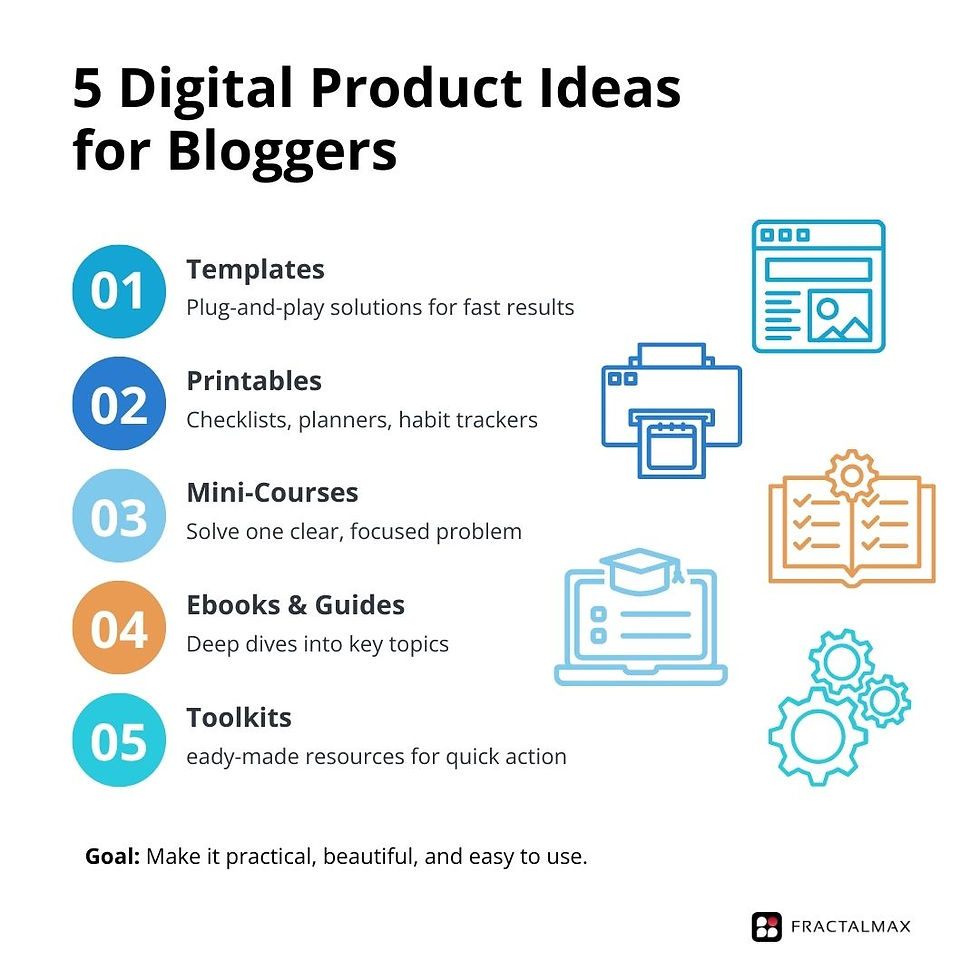
Digital products can take so many forms.
It’s about knowing your audience, spotting what they need, and offering it in a format that feels easy and valuable to them.
Here are just a few examples that work really well:
Templates: Ready-to-use templates for social media posts, email sequences, business plans—you name it.
Printables: Checklists, planners, art prints, goal trackers. Simple, but incredibly popular.
Mini-courses: Bite-sized trainings focused on solving one clear problem.
Ebooks and guides: Deep dives into a topic your audience already cares about.
Toolkits and swipe files: Collections of resources that help people take faster action.
What I love about digital products is the freedom they offer.
You’re not tied to inventory.
You’re not dealing with shipping headaches.
It’s just you, your ideas, and a way to serve people on their own schedule.
When you focus on creating something that genuinely helps, digital products can turn your blog into more than just a platform.
They turn it into a real business.
5. Services
Offering services is one of the most effective ways to monetize a blog—especially when you’re just starting out.
The global management consulting services market is expected to grow from $1.02 trillion in 2024 to $1.07 trillion in 2025, at a CAGR of 4.6%. Source: The Business Research Company
You already have skills. Your blog becomes the proof that you know what you’re talking about.
It’s something I’ve done myself in different areas, from web design to marketing strategy.
And every time, the key has been the same: connect what I know with what people actually need.
Services can take so many different forms depending on your niche.

Here are a few examples:
Coaching or consulting: Helping people one-on-one to solve specific problems.
Design services: Creating websites, graphics, branding assets.
Content writing or editing: Helping businesses or bloggers create better content.
Social media management: Running content calendars, engagement, and growth strategies.
Tech support: Setting up blogs, automations, or troubleshooting online systems.
If you’re thinking about offering services, the best place to start is by asking yourself:
“What’s something I’m good at that people already ask me for help with?”
That’s usually where the opportunity is hiding.
The beautiful part about services is that they’re personal.
You’re not just selling a product—you’re building real relationships. And often, those early service clients become long-term fans, collaborators, or even friends inside your growing ecosystem.
6. Freelance Writing
If you love writing and you’ve built up a blog, freelance writing can be a natural next step.
You already have the skills—you’re just offering them to others who need great content too.
Freelance writing is not just about writing, it's about listening, adapting, and showing up professionally.

Freelance writing can open doors in all kinds of niches:
Blog posts: Helping businesses keep their websites fresh and active.
Website content: Crafting about pages, service pages, product descriptions.
Email newsletters: Writing sequences that build trust and drive action.
Ghostwriting: Creating content behind the scenes for entrepreneurs or brands.
Guides and ebooks: Longer-form content that positions your clients as authorities.
Social media content: Crafting engaging posts to grow and maintain a brand's online presence.
Press releases: Writing announcements to help businesses share news and updates effectively.
Case studies: Showcasing success stories to build credibility and trust with potential clients.
What matters most isn’t just how well you write—it’s how well you solve problems with your writing.
If you’re thinking about offering freelance writing services, a few things will help you stand out:
Build a small portfolio (your blog posts count!).
Respond professionally and on time.
Charge based on value, not just word count.
Freelance writing isn’t always the flashiest path—but it’s one of the most reliable ways to turn your blog skills into real income.
And the best part?
You keep getting better with every project you take on.
To get more clients you can register on Fiverr or Upwork
The freelance writing industry is projected to be worth $107 billion in 2026, reflecting its growing demand and profitability. Source: Forbes
7. Online Courses
If you’ve been blogging for a while, chances are you already have expertise people would pay to learn.
The global e-learning market is projected to reach nearly $400 billion by 2026, with a CAGR of 9.1% between 2018 and 2026. Source: Coursmos
That’s where online courses come in—and they can become a powerful extension of your blog.
I know this firsthand.

I’ve already created two courses based on my journey:
AI Compass – ChatGPT Mastery, helping people unlock the real power of AI tools,
and Building Your Hub-Based Business Model, teaching how to create an ecosystem that supports long-term growth.
Each course was a real project—built not just to share information, but to guide people toward real, actionable transformation.
Creating a course can feel overwhelming at first, and even setting the right price for your online course can be tricky when you're just getting started.
But when you focus on one simple question—What change can I help someone achieve?—the path becomes clearer.
Courses don’t have to be massive to make a difference.
Some of the best ones are short, focused, and immediately useful.
Use your unfair advantage!
Here are a few popular formats:
Mini-courses: Quick wins, solving one focused problem.
Full programs: Comprehensive step-by-step journeys.
Live workshops or challenges: Fast momentum and interaction.
The best courses don’t just teach—they guide, support, and inspire change.
And that’s where real loyalty, referrals, and long-term business growth begin.
It's also something I’m excited to keep expanding with FractalMax—building content and real pathways for people ready to grow.
8. Membership Sites
Membership sites are one of the smartest ways to build real connections with your audience—and eventually, a powerful stream of recurring income.
Instead of a one-time transaction, you create a space where people choose to stay, learn, and grow with you over time.
It’s something I’m already building with FractalMax.
Right now, my membership is free—because my focus is on building real relationships, delivering value, and creating an ecosystem where growth naturally happens.

The subscription economy, which includes membership sites, is expected to reach $905 billion annually by 2026, indicating a significant growth trajectory. Source: Mighty
At the heart of a strong membership is simple value:
Are you helping people solve problems, stay inspired, or keep moving forward?
There are so many creative ways to structure a membership:
Private communities: Spaces where members can ask questions, share wins, and connect.
Exclusive content libraries: Special guides, templates, and trainings only available inside.
Hosting Live Events: Live sessions to learn from industry experts and stay motivated.
Challenges and accountability groups: Helping people stay consistent with their goals.
Special perks or early access: Rewarding engaged members with exclusive opportunities.
Memberships aren’t about locking people in—they’re about creating a place people want to stay.
When you consistently deliver real value, even a free membership can turn into an incredible foundation for long-term growth.
For me, it’s about building trust first—because strong communities build strong businesses.
9. Ebooks
Ebooks are a smart way to turn your blog expertise into a product people can actually buy.
If you’re already creating valuable content, an ebook simply organizes it into a format that’s easy to consume—and easy to sell.
The global e-book market size is estimated to grow by $14.52 billion from 2025 to 2029, expanding at a CAGR of 10.7% during the forecast period. Source: PR Newswire
I’ve already created a series of ebooks focused on affiliate marketing.
I’m not selling them yet, I use them as lead magnets. I may turn them into paid Ebooks in the future.
Here’s why ebooks are such a powerful option:
They package your knowledge: Clear, actionable advice all in one place.
They help build authority: Establishing yourself as a go-to expert in your field.
They create income opportunities: Even low-ticket ebooks can turn into reliable income streams.
They scale effortlessly: Once created, they can be sold over and over again without extra work.
They drive engagement: A well-targeted ebook can bring people into your ecosystem, leading to courses, memberships, and more.

An ebook doesn’t need to be long or overly complex.
The best ones are usually short, focused, and solve one clear problem that your audience is struggling with.
If you’re already sharing valuable content through your blog, you’re closer to having an ebook than you might think.
It’s just about organizing your insights and offering them in a way that people are excited to invest in.
10. Consulting
Consulting is one of the most rewarding ways to leverage your expertise and provide real, personalized value to others. It’s about taking everything you know and helping people solve problems or achieve their goals through one-on-one guidance.
If you’ve built a solid foundation of knowledge in your niche, launching your own consulting services could be a great next step. Here's how you can get started:
Identify your strengths: What do people ask you about the most? What problems do you frequently solve for others? These are the areas where you can offer valuable consulting services.
Narrow your focus: Consulting works best when you specialize. Whether it's marketing, business strategy, or mindset coaching, find your niche and offer solutions to specific problems.
Set clear offerings: What can you help people with? Create distinct packages like coaching sessions, business strategy advice, or specific problem-solving services.
Market your services: Share your expertise through blog posts, social media, or webinars. Once people see the value you can provide, they’ll be more likely to reach out for help.
Build trust: Just like with affiliate marketing or content creation, consulting is built on trust. Be transparent, provide actionable insights, and show that you about your clients’ success.

The management consulting services market size is expected to reach $357.83 billion in 2025 and grow at a CAGR of 4.75% to reach $451.28 billion by 2030. Source: Mordor Intelligence
Consulting is really an amazing way to diversify your income and establish yourself as a thought leader in your field. So if you’ve built up expertise, it might be the right time to turn your knowledge into a service people are eager to invest in.
Conclusion
So, there you go—10 ways to turn your blog into something that works for you. The best thing you can do is start where you are. Test out a few strategies, pay attention to what resonates with your audience, and be patient. You’re building something real, and that takes time.
If are thinking about monetizing your blog or taking it to the next level, the perfect time to get started is: NOW. It’s all about finding your rhythm, staying true to your values, and being willing to learn and adjust as you go.
Which of these strategies resonates most with you? Drop a comment below and share your thoughts or experiences — I’d love to hear how you plan to start earning from your blog!
At the end of this page you'll find a glossary.
Thanks for reading,
Laurence
Frequently Asked Questions: How to Make Money By Blogging
What are the best ways to make money blogging in 2026?
In 2025, there are several effective strategies to make money blogging. Here are the top ten methods:
Affiliate marketing: Partner with brands and promote their products through affiliate links. You earn a commission for every sale made through your link.
Google AdSense: Use Google AdSense to display ads on your blog and earn money based on clicks and impressions.
Online courses: Create and sell online courses related to your blog niche, sharing your expertise with your audience.
Sponsored content: Collaborate with companies to create blog content that promotes their products or services for a fee.
Membership sites: Offer exclusive content or services to paid members, providing a steady income stream.
eBooks: Write and sell eBooks on topics relevant to your audience, leveraging your expertise.
Consulting or coaching: Provide one-on-one consulting services or coaching sessions in your area of expertise.
Merchandise: Sell branded merchandise related to your blog, such as apparel or accessories.
Donations: Use platforms like Patreon to ask your audience for support, allowing them to contribute to your work.
Social media monetization: Leverage your blog's social media presence to earn through partnerships or sponsored posts.
How do I start a blog to make money?
To start a blog that generates income, follow these steps:
Choose a blog niche that you are passionate about and has a potential audience.
Select a blogging platform that suits your needs, such as WordPress or Wix.
Purchase a domain name and hosting service to launch your blog.
Create quality blog content that is valuable to your audience and optimized for SEO.
Promote your blog through social media, email marketing, and SEO strategies to drive traffic to your blog.
Explore different monetization options such as Google
How to make money blogging for beginners?
Beginners can start making money blogging by focusing on proven strategies like affiliate marketing, offering freelance services, selling digital products, and joining ad networks. The key is to create valuable content, grow an audience, and match the right monetization method to your readers' needs.
How important is it to choose the right blog niche?
Choosing the right blog niche is crucial as it determines your target audience and the potential to make money from blogging. A well-defined niche helps you establish authority and attract a dedicated readership, which is essential for monetization strategies like affiliate marketing and selling digital products. A specific niche allows you to tailor your blog content to meet the needs of your audience.
Earn money with Blogger in 12 minutes — is it possible?
Seriously? Building a profitable blog takes consistent work, not just 12 minutes. However, spending even a few focused minutes each day — like applying to an affiliate program, or improving content — can move you closer to monetization over time.
What is the fastest way to make money blogging?
The fastest way to earn money blogging is by offering services like freelance writing, consulting, or coaching. These require minimal setup and allow you to start earning as soon as you land your first client — even before building a large audience.
How to create a blog for free on Google and earn money with it?
You can create a free blog using Google's Blogger platform. After building quality content and attracting some traffic, you can then apply for Google AdSense to start earning through ads. Keep in mind that growing income usually requires consistent posting and strategic monetization.
Can I make money blogging about my life?
Yes, you can make money blogging about your life — especially if you focus on sharing experiences that help or inspire others. Successful personal bloggers often monetize through affiliate marketing, sponsorships, selling ebooks, offering coaching, or creating courses related to their journey.
How to make money blogging in 3 months?
To make money blogging within 3 months, focus on building a specific niche, publishing helpful content regularly, promoting your blog actively (SEO + social media), and offering a service like freelance writing or coaching. Setting clear short-term offers increases your chances of faster income.
What role does blog traffic play in making money online?
Blog traffic is fundamental to making money online as it directly impacts your blogging income. More visitors mean higher potential earnings from ads, affiliate links, and product sales. To increase traffic to your blog, focus on SEO, create shareable content, and engage with your audience on social media platforms.
Can bloggers still earn money from Google AdSense?
Yes, bloggers can still earn money from Google AdSense in 2025. Although competition is high, optimizing ad placements and improving blog traffic can enhance earnings. It's essential to balance user experience with ads.
Is affiliate marketing a great way to monetize a blog
In the blogging journey, many wonder if it's possible to make money blogging. One of the best ways to make money is through affiliate marketing, which allows you to make money from a blog by embedding affiliate links. As you build an audience, you can use your blog to generate blogging income and truly make money online.
What are the Blogger monetization requirements?
To monetize a Blogger blog with Google AdSense, you typically need original content, a user-friendly layout, clear About and Contact pages, and some initial traffic. Meeting AdSense's program policies is essential, including following guidelines on content quality and copyright.
How can I attract brands for sponsored posts?
To attract brands for sponsored posts, focus on building a successful blog within a specific blogging niche. By creating your blog with quality content and consistent engagement, you can demonstrate how bloggers make a profitable blogging business. This can lead to money with your blog as brands see the potential to reach your audience.
What marketing tools do I need to monetize my blog?
To make money blogging, having the right marketing tools is key. You’ll need an email marketing platform to build a list, an SEO tool to optimize your blog posts for traffic, and affiliate tracking tools if you plan to promote products. Content planning tools help you stay consistent, and analytics tools show you what’s working. Whether you want to earn through affiliate marketing, digital products, or sponsored posts, smart marketing tools are what turn a blog into a real income stream.
Do I need a large audience to make money blogging?
If you want to make money from your blog, a large audience isn't always necessary. While a substantial following can help, focusing on a profitable blog niche is more important. By targeting specific interests and needs, you can really make money through guest blogging and money by selling products.
There are several ways bloggers make money, such as video blogging, affiliate marketing, and sponsored content. These methods are a great way to make money online and can help you earn a living without needing millions of followers. Many people start blogging because it's a way to make money online.
Consider your blogging efforts and how much money you can make by choosing the right strategies.
Glossary of Blogging Monetization Terms
Advertising
Selling space on your blog for brands to display ads—either via automated platforms like Google AdSense or through direct brand deals.
Example: A food blogger earns income through banner ads placed by Mediavine on recipe posts.
Affiliate Marketing
Recommending physical or digital products or services and earning a commission when someone makes a purchase through your unique tracking link.
Example: A tech blogger earns a 20% commission every time a reader buys a software tool through their affiliate link.
Sponsored Posts
Creating paid content in partnership with a brand to highlight its offering in a way that fits naturally into your blog’s theme.
Example: A lifestyle blogger publishes a sponsored article reviewing a new fitness app in exchange for a flat fee.
Digital Products
Downloadable or virtual goods—like templates, planners, or toolkits—that are sold repeatedly after a one-time creation.
Example: A productivity blogger sells a digital habit tracker bundle to readers through their blog shop.
Services
Turning your skills into income by offering direct support, like design, coaching, or strategy, based on what your audience needs.
Example: A wellness blogger offers one-on-one coaching sessions for stress management via their site.
Freelance Writing
Providing written content to other websites or companies, using your blogging experience to earn income on a per-project basis.
Example: A travel blogger writes paid guest articles for tourism blogs and hotel websites.
Online Courses
Structured learning experiences that teach your audience how to achieve specific results using your methods or expertise.
Example: A finance blogger launches a course teaching beginners how to budget and save money effectively.
Membership Sites
Creating a members-only area with gated content, tools, or community support in exchange for a recurring fee.
Example: A business blogger runs a private membership site where subscribers access monthly strategy calls and exclusive templates.
Ebooks
Self-published digital books that share your knowledge in a focused, downloadable format people can buy or access as lead magnets.
Example: A blogging coach offers a $9 ebook titled “30 Blog Post Ideas for Every Niche” to grow their email list.
Consulting
Offering strategic, one-on-one advice tailored to individuals or businesses who want to learn directly from your expertise.
Example: A marketing blogger consults with small business owners on how to grow their online presence using content.
Disclaimer: The strategies and examples shared in this article are intended to provide general guidance for earning money through blogging. Results are not guaranteed and can vary based on factors such as effort, niche selection, audience engagement, and market conditions. Building a profitable blog typically requires time, consistent work, and ongoing learning - it's not easy. This article does not promise or guarantee any specific income or financial outcome.


This might be useful for you - url shortener and QR code generator. I use this, pretty good service with analytics https://link2.bz/fumco